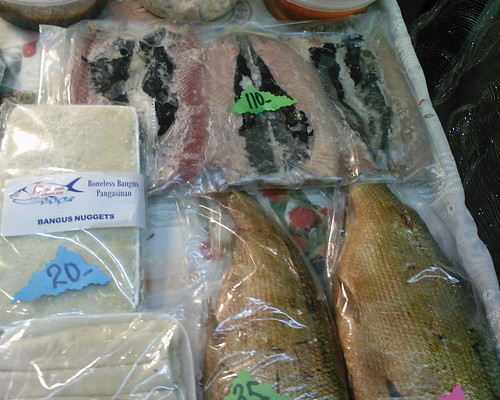
Bangus (Philippine milkfish) is one of my favorite foods, and so does a great number of people. The Philippines is certainly blessed to have lots of them for propagation and distribution. As a result, they have attained world-class export status. It's a good thing that in the Philippines, we enjoy them in a variety of ways and assorted bangus products are now available in the market.
So aside from the regular fresh bangus, daing na bangus and tinapang bangus we can easily have in the palengke (fresh market), enterprising businessmen have now packaged them into a variety of products to be enjoyed.
At the ongoing Manila Foods and Beverages Expo, I visited a booth called Tita Marina's Homemade Special Pangasinan Bangus. What caught my eye was their brochure showing the immaculate bangus in various incarnations, namely: relleno, tocino bangus, boneless tinapa, shanghai bangus with cheese, bangus sardines, bangus siomai, bangus fish nuggets and a few others.
Even my favorite Chinese restaurants offer a bangus dish with tofu. I don't have any picture now, but I tried this at home and it came out delicious.
Here's my recipe for Bangus with Tofu:
First I have one whole bangus deboned and filleted at my favorite suki in the market.
I set aside the belly portion for cooking the dish and marinate it in a soy sauce, pepper and kalamansi.
I mince lots of garlic and saute it in olive or canola oil. Take care not to burn the garlic or it will spoil the dish.
Take out the garlic and then fry the bangus belly. Season with salt and sugar. Add the bangus marinade and a little more liquid if necessary.
Add the japanese tofu (soft variety) and the garlic bits before turning off the heat. You may also put in mushrooms.
Serve in a plate or sizzling pan if you prefer.
Thursday, June 21, 2007
Bangus with tofu and the many ways with milkfish


Saturday, June 09, 2007
Cooking French: flambeed strawberries with vanilla ice cream
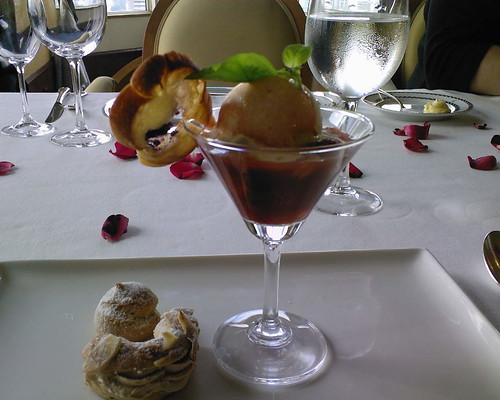
To continue with our Manila Diamond Hotel cooking series, here's something that's guaranteed to impress your partner or date and win you loads of beauty points. Recipe provided by MDH's Le Bellevue Restaurant:
Pick out 400 grams of strawberry. Clean and remove the leaves and keep dry.
Gather approximately 15 grams of peppercorn. Blanch in boiling water 20 seconds and set aside.
Also gather four leaves of basil. Clean and cut into strips with scissors.
Heat olive oil in skillet.
Add brown sugar and make a light caramel.
Saute strawberries with butter. Add green peppercorn.
Take out one small glass of mango juice. Pour into the pan over strawberries. Simmer for one minute then add basil strips and a little more olive oil. Roll in pan.
Set up the flambeed strawberry in glass. Top with vanilla ice cream and pin toasted ensaymada on side of glass.
Thursday, May 17, 2007
Diamond Hotel Japanese cooking class & recipes from Yurakuen restaurant
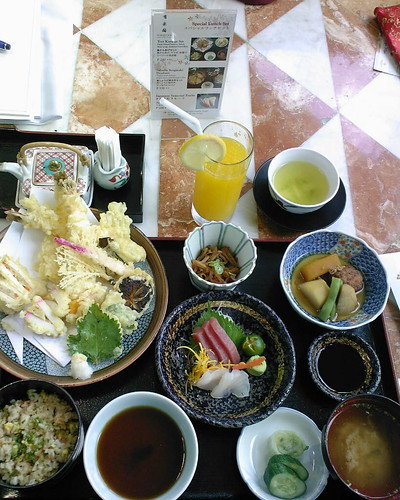
I was privileged enough to participate in a cooking class offered every weekend by Diamond Hotel. Appreciated this very much as am a big fan of Japanese food. By now everyone knows that the cuisine is all about purity of taste, the freshness of the ingredients and the beauty of presentation of the prepared food.
For this class, we were able to learn a lot from Chef Junichi Sekiyama and his team from Yurakuen Restaurant. It was very helpful since we were able to learn a lot of cooking techniques and tips on what brands to purchase and where to source Japanese products in Manila.
For example, almost every Pinoy loves tempura, but do you ever wonder how to make the perfect one? Sharing here some treasured recipes from Yurakuen and Chef Sekiyama:
Ebi tempura
Choose one kilo good-quality fresh shrimps. Remove skin while shrimp is raw. Leave tail intact.
Scrape tip of shrimp tail with knife to remove dirty liquid and devein the shrimp.
Make small slices along the shrimp's body so shrimp will not curl when cooked.
Wrap shrimp in a paper towel and gently squeeze out excess liquid. Set aside.
Prepare the ingredients for tempura batter:
In a bowl, mix one cup Japanese tempura flour and 3/4 cup water with ice until lump-free.
Add one egg yolk to add color and texture.
Test heat of the oil by dripping a small amount of the batter into the pan. If batter floats right away, oil is ready; but if the batter hits the bottom of the pan before floating, oil is not hot enough.
Dredge shrimp in flour, then dip in batter.
Fry (preferably in corn oil) until coating turns light yellow.
Remove shrimps from pan and drain oil in paper towel.
To make tempura sauce:
Mix together six parts water, one part kikkoman, one part mirin and 10 grams hondashi. Place one tsp. ground fresh ginger and ground radish on the side.
Mixed Japanese fried rice
Saute chopped garlic in oil until golden brown. Add in chopped white onion and minced carrots.
Set side in one corner of the pan.
In the center of the pan, cook 10 grams of beef until it becomes white.
Add in 10 g. shrimp and squid and mix beef and sauteed vegetables all together.
Season with salt, pepper and Kikkoman soy sauce.
Move again to one side of the pan to makie room for egg.
Cook egg in the middle of the pan and scramble it.
Add steamed rice and mix well.
Season with more salt and pepper, if needed.
Monday, May 14, 2007
Lasang Pinoy 17: Squash Yema
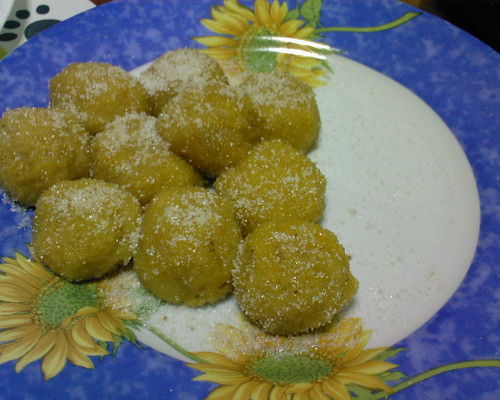
Thanks to Angelo of Eat Matters who is hosting this month's Lasang Pinoy, a Filipino food blogging event with focus on any egg-based recipe, I had to rummage through my best culinary memory for a dish that can truly be considered Egg's a Deal!
The result is this simple but great-tasting yema; not just any yema, mind you, but a squash or pumpkin yema that my veggie-hating kiddos relished with gusto. Kids always love sweets and so entranced were they with the taste that they forgot it's something they wouldn't eat otherwise if the squash was sauteed with other vegetables or simmered in coconut milk.
A yema is a Filipino round-shaped candy of Spanish origin which counts among its main ingredients egg yolk and condensed milk. The mention of yema evokes memories of my childhood since I always happily munched on this sweet treat and/or cooked this in home economics class.
The recipe for the candy I adapted from "Filipino Cuisine," my favorite local cookbook published by Centro Escolar University.
How to prepare -
toast 1/2 cup pinipigchop three tablespoons of jackfruit or langkaopen one can of condensed milktake out two tablespoons of butter or margarine from the refrigeratorboil and mash one cup of squash, chopped into piecesprepare six pieces egg yolks by using egg separatorchop two tablespoons peanuts or cashew nutstake out three-fourth cup sugar
For the final countdown -
"Mix pinipig and langka in condensed milk. Set aside.
In another bowl, combine butter, squash, egg yolks and cashew nuts. Add to the pinipig mixture and mix thoroughly. Transfer to a heavy saucepan and cook over low heat, stirring constantly. When thick enough to hold its shape, remove from heat. Cool mixture. Form 1/2 tablespoon mixture into balls and roll in sugar. Wrap each in cellophane."
Cook's Notes:
1. Toast the pinipig enough only so as not to burn.
2. The reason why I shy away from buying squash and thereby cooking pinakbet is that it's so difficult to chop. Save kitchen time by buying chopped squash pieces in the market, but make sure it's freshly prepared.
3. The nuts are optional. I omitted them from my recipe and it was still able to hold its own. You can add more pinipig and more squash though.
4. Make the candy more attractive to kids by buying multi-colored wrapper. Enjoy:)
Thursday, January 19, 2006
Banana Chocolate Chip Muffins
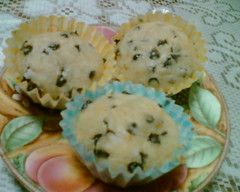
How to bake these muffins: (Adapted from Epicurious)
Preheat oven to 350F.
Mix 1 1/2 cups all purpose flour, 2/3 cup sugar, 1 1/2 tsp. baking powder and 1/4 tsp. salt in a large bowl. Mix 1 cup ripe mashed bananas, 1 large egg, 1/2 cup melted butter and 1/4 cup milk in medium bowl. Stir banana mixture into dry ingredients just until blended, then add chocolate chips.
Put batter unto muffin cups then bake until done, about 35 minutes. Makes 12 delicious muffins.
Saturday, July 09, 2005
Paksiw na Pata (Vinegar-Simmered Pork Hocks)
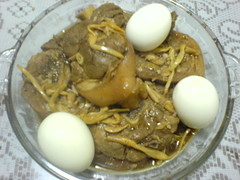
How I cooked: simmer about 1 kilo pork hocks in 2 to 3 cups of water. When half-tender, remove "dirt" that gathers on top. When water has been reduced, add 1 1/2 cup vinegar, 1/3 cup soy sauce, lotsa garlic, and a few pieces whole black pepper. Let boil until hocks are fork-tender. Season with salt and brown sugar. When almost done, add the banana blossoms which you may or may not remove prior to serving.
I do add hard-boiled eggs as it goes well with the delectable sauce that goes with this dish.
Friday, June 24, 2005
Rellenong Talong: A Variation
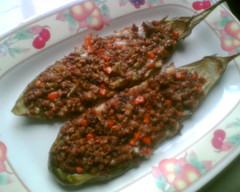
I saw a revised recipe in Food Magazine and I thought it was a good idea: you can actually add vegetables like Baguio Beans and carrots for a healthier alternative. What more, the veggies can act as extenders to the ground meat which is getting costlier these days.
Other ingredients you might like to add: potatoes, sweet peas, sausages and red pepper.
When I cooked this dish, I thought it was lacking in eggs and so I promise to do better next time. Talk about kitchen hits and misses:)
Saturday, June 18, 2005
Adobong blue marlin in creamy sauce
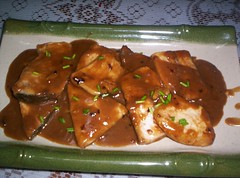
But I still had blue marlin fillets left and so tried a blue marlin in creamy sauce recipe from The Best of Food Magazine. I revised this a little because I added left-over sour cream from a salad I made which further improved the quality of the sauce. Here goes:
Slice your blue marlin into cubes then saute in garlic and ginger for about two minutes.
Working quickly,mix vinegar, soy sauce and water as you would in adobo and top with a dash of sugar. Add this mixture to pan-fried fish and simmer for 1 minute.
Add sour cream until sauce is thickened and thoroughly cooked. In the absence of sour cream, mix corn starch with hot water.
Serve the creamy fish cubes and top with green onions, if desired.
Friday, May 20, 2005
Candied Yams with Citrus-Pandan Glaze
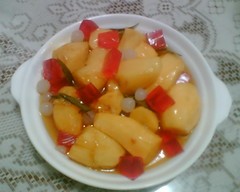
Sweet potatoes or yams are quite popular in the Philippines. They are known in local parlance as kamote and can be labelled as "poor man's food" because of their availability. However, there's no reason why you cannot add glamor to this edible tuber which are always in season and sold cheap in Philippine markets. As such, I thought it best to feature this recipe for this month's SHF event, billed Pucker Up With Citrus, by uber-energetic host Alice of My Adventures in the Breadbox.
This native dessert is quite easy to prepare. While the yams take centerstage in the recipe, the citrusy glaze takes the limelight as well. Doubled with the irresistible scent of pandan leaves, it is enough to make you think of sweet memories and special occasions when something good was wafting in the kitchen. Well yes, this was sweet indeed.
Candied Yams
From the recipe of Dorothy MJ Ferreria
1 kilo sweet yellow potatoes or yams
Syrup:
1 cup white sugar
1/2 cup water
1/4 cup butter
Juice & rind of 1 orange
1/2 cup water
1 pandan leaf, stripped
1/4 cup mango, or pineapple, or orange marmalade
Juice of calamansi lime
Garnish:
red kaong or sago
Procedure:
1. Peel and slice sweet potatoes into large chunks.
2. To make the sauce, pour sugar and water in a large saucepan. Place over medium heat and allow to boil until caramelized to a nice golden brown.
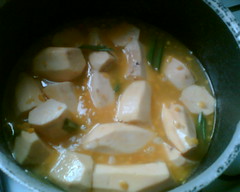
3. Working quickly, pour in butter, juice and rind of 1 orange, water, pandan leaf and orange marmalde. Mix well.
4. Add raw potato chunks and continue cooking on low heat, stirring frequently until tender. Add calamansi lime after cooking for a stronger citrus flavor. Garnish with red sago and kaong.
Not your usual sinigang
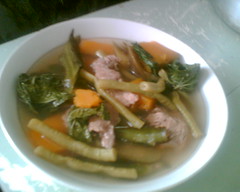
Native Vegetables and Beef Sinigang
Ingredients:
100 g. beef round, sliced thinly
6 cups water
1/2 cup sliced kalabasa
1/2 cup sliced sigarillas
1/2 cup sitaw, cut into 2 inches long
1/2 cup sliced eggplant
1 27g. Maggi Beef Sinigang Flavor Mix
1/2 cup saluyot
Procedure:
1. Boil beef in water and cook until tender or about 20 minutes.
2. Add vegetables one at a time giving 1 minute interval before adding the next kind.
3. Add sinigang mix and bring to a boil.
4. Add saluyot leaves and turn off the heat.
Note: You may also add gabi. Cut into pieces and mash for a creamier, tastier soup.
Deep-Fried Pompano with Tomato Salsa
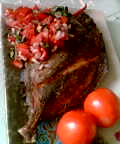
I like my pompano fried to a crunch and so the problem was just finding the dressing or the salad to go with it.Luckily, I found one recipe in Glenda Barretto's Via Mare Seafood Cookbook which was so easy to adapt in my kitchen. Here goes:
1. Season fish with calamansi (or lemon), salt and pepper.Set aside for at least 15 minutes then fry until golden and crispy.
2. Make the salsa. Combine tomatoes, spring onion, red onion, garlic and chopped coriander in a bowl, then add olive oil and toss. Season with 1 tbsp. fish sauce and arrange over th fish or as a side dish.
Wednesday, April 06, 2005
Macaroni Salad with a Twist

Monday, April 04, 2005
Pasta recipes that will make you excited about Lent
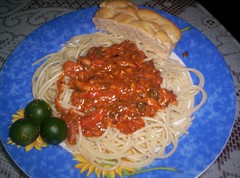
It was Holy Week, and everyone being on the "no meat mode," I joined the bandwagon. First on my agenda was trying the sardine pasta contained in my newly-bought cookbook of Beth Romualdez entitled Cooking Lessons. When I saw the recipe, I said "whattt?" Sure, pasta with tuna is rather commonplace but I wonder how it tasted like with sardines. All the more that I was curious because the author called it her "comfort food." So I wasted no time in going to the kitchen to experiment on this one. My verdict: it was damn good. But I followed the chef's advice to use only this brand of sardines. I figured that anything else would have been malansa or something like it.
Spaghetti A La Rose Bowl (adapted from "Cooking Lessons")
Ingredients:
2 cans (215 g. each) Rose Bowl sardines in tomato sauce
1/4 cup extra virgin olive oil
6 cloves garlic, chopped
1 medium red onion, chopped
2 packs (115 g. each) tomato sauce)
1 tsp. dried pepper flakes
small bottle capers
juice of 1 calamansi
pinch of sugar
salt and pepper to taste
1 package (500 g.) spaghetti
grated Parmesan cheese
Procedure:
1. Remove bones from sardines and discard. Cut up sardines in small chunks with a fork and set aside.
2. In a skillet over medium heat, heat olive oil and add garlic and onions. Add sardines, tomato sauce, red pepper flakes and capers. Cook for 2 minutes and add calamansi juice and sugar. Season with salt and plenty of ground pepper.
3. Remove from heat and transfer to a bowl.
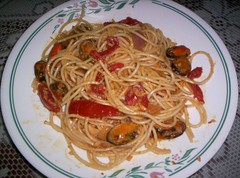
4. Cook the spaghetti according to package directions. Add sardine sauce as topping and mix.I saw this second pasta dish in the latest issue of Food Magazine and was immediately enticed by the picture. It seemed easy to duplicate in my kitchen since mussels are a-plenty and cheap in the market & I also had a bottle of crab fat (aligue) that waited to be used. Sure, the crab fat is high cholesterol but it should be good to serve to your friends once in a blue moon since it's very easy to prepare.
Golden Pasta with Lemon and Garlic Mussels (from Food Mag)
2-3 kilos mussels
1 cup olive oil
1 head garlic, minced
1/2 cup crab fat (bottled aligue)
2 tablespoons lemon juice
1/2 cup cooking liquid (from cooking the mussels)
1/2 cup sun-dried tomatoes
salt and pepper to taste
400 grams linguini or other pasta, cooked al dente
parmesan cheese
1. In a large pot, cook mussels in enough water to cover just until their shells open. Drain, reserving 1/2 cup of the liquid. Remove mussels from the shells. Set aside.
2. In a large saucepan, heat oil. Add garlic and saute until golden. Pour in crab fat, lemon juice and cooking liquid. Simmer for five minutes. Stir in mussels and sun-dried tomatoes and simmer for two more minutes. Season with salt and pepper.
3.Turn off heat. Add cooked noodles and toss to coat the strands evenly with sauce. Transfer to a serving dish and serve with a sprinkling of Parmesan cheese.
Wednesday, January 26, 2005
Clams in Wine
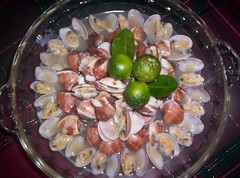
On the other hand, I saw a very interesting clam recipe in a food magazine which would make use of the white wine chilling out in our ref. It is a simple, easy-to-make Portuguese dish called Bulhao pato and the recipe is this:
1.5 kgs. clams
2 tbsp. olive oil
5 cloves garlic, chopped
1 glass white wine
salt and ground white pepper to taste
1 pc. lemon, juiced
1 bunch coriander, chopped
lemon or kalamansi wedges for garnishing
Procedure:
1. Soak clams in salted water for a few hours.
2. Heat olive oil in saute pan. Add garlic and clams, and saute for a couple of minutes. Pour in white wine, season with salt and water, and continue sauteing until clams open. Add lemon juice and chopped coriander, saute a little bit more and serve in a platter with lemon or kalamansi wedges.
*** I noticed that this type of cooking is similar to the recipe for Pasta alle Vongole. Just make a few adjustments to to transform this dish into a topping for your pasta and the result will still be incredibly good.
Monday, January 17, 2005
My Favorite Omelette
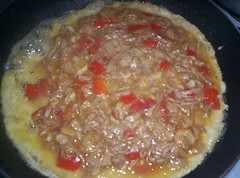
I love eggs, or any food with eggs on them, especially omelettes. Unfortunately, it's not something I always cook, maybe because my kids prefer their eggs either sunny side up or scrambled only. But I like the omelette because it's very easy to prepare and is versatile for breakfast, lunch or dinner.
Here's my favorite recipe:
1 piece onion
3 cloves garlic
2 pieces medium tomatoes
1 can tuna
2 eggs
salt and pepper to taste
oil for frying
1. Saute onion, garlic and tomatoes and cook till transparent.
2. Add tuna.
3. Transfer cooked mixture to egg bowl.
4. In a non-stick pan, heat oil and when hot enough, put in egg & tuna mixture.
5. When almost done, flip to other side and cook also till set.
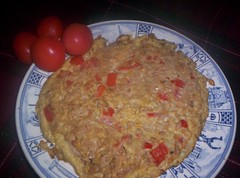
This was how my omelette looked like when it was done. I am quite particular in turning out a perfectly-shaped omelette and what I do is put a plate or pan cover over it when it's ready to be served and flip to the other side. Ergo, you got a round (not folded) omelette.
Puto + Siopao = Puto Pao
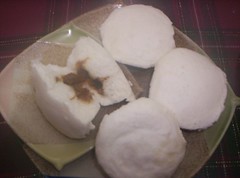
As you might have guessed, puto pao is a variation from the traditional steamed delicacy because it has a filling, usually asado.
I still have to prepare something like it but luckily, I found one recipe in Food Magazine which might be worth trying:
Batter
3 cups all-purpose flour
1 cup cake flour
1 cup powdered milk
4 tablespoons baking powder
2 1/2 cups water
3 pieces whole eggs
Topping
2 tablespoons cooking oil
1/4 kilo ground pork or beef
2 tablespoons minced celery (optional)
1 tablespoon soy sauce
1 tablespoon seasoning
pinch of salt
pinch of sugar
pinch of pepper
pinch of MSG
1. In a bowl, combine all-purpose flour, cake flour, milk, baking powder, water and eggs. Mix until well-blended. Set aside for one hour.
2. Prepare the topping: In a skillet, heat oil and cook ground meat until brown. Add the celery, soy sauce, seasoning, salt, sugar, pepper and MSG. Stir mixture occasionally until ground meat is cooked.
3. Pour puto batter in greased small muffin cups about half full. Add a tablespoon of topping in each cup. Steam for 10 to 15 minutes.
As a final note, do tell me how it turned out;)
Monday, January 10, 2005
A new way with shrimp
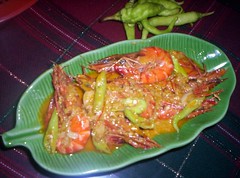
I haven't eaten shrimps in a long time (maybe because this remains an expensive seafood in Manila) and so decided to cook it with the Alavar sauce. For those curious, Alavar is made from coconut milk and "secret" spices (as the packet says) and is yellowish in color. It is named after a popular restaurant famous for its Zamboanga cooking.
Cooking the dish entailed just sauteing the garlic until brown, adding the shrimps and sort of stir-frying them in the pan till they turn orange. Afterwards, I poured the Alavar sauce, letting it simmer for two minutes. The addition of Philippine green peppers completed this simple yet savory dish.
And yes, you guessed it...this is just one of my culinary inventions. I didn't come prepared with the precise procedures and ingredients. But am sure fellow cooks can picture what am saying here... saute, stir and simmer. Enjoy!
Monday, January 03, 2005
Merry, Happy, Full!

It turned out to be enjoyable.My son slept through the fireworks but the twins and me had fun dancing after the clock struck twelve. Then, it was time to head off to the table where I prepared a simple feast of the ham and fruits given to me over Christmas, assorted puto, and some of the food I prepared: the tulingan pasta, beef stew and special fruit salad.
Even though it was only the nanny, me and the twins sharing the meal, the simple feast proved to be fantastic.
The tulingan pasta, which is made from the Spanish mackerel fish growing in the Philippine seas, proved to be a revelation. I got the recipe from Chef Dennis of Hotel Pontefino and there's no doubt I'm cooking it again. I like cooking with wine and this tasted absolutely yummy, not to mention so easy to prepare.
The beef stew is an old specialty of mine while the fruit salad was a take-off from a recipe in Food Magazine.
TULINGAN PASTA
Ingredients:
15 ml. olive oil
20 g. garlic, chopped
100 g. shrimps, peeled and deveined
30 ml white wine
60 ml shrimp stock
200 g. spaghetti,cooked
5 g. basil, julienned
15 g. butter
40 g. sinaing na tulingan flakes
40 g. button mushroom, sliced
salt & pepper to taste
15 g. parmesan cheese
2 pcs. lemon or calamansi
In a pan, heat olive oil. Brown the garlic (I love garlic so I add a lot!), then add the shrimps and mushroom.Deglaze with white wine and add the shrimp stock.Toss in the pasta and fresh basil leaves. Add in the butter and remove from heat. Top with the tulingan flakes and parmesan cheese. Serve with lemon wedges on the wide.
**Notes: there was no basil available so i skipped it but the dish still tasted delicious with just the addition of Italian seasoning . The tulingan flakes I bought from a Batangas food vendor but you can try experimenting with other fish, like ordinary tuna.
Friday, December 17, 2004
A Taste of Taiwan

In the same Taiwan booth, I tried their dessert which is called Ice Bar. I found out it was a better, tastier version than the rage of the moment, the Ice Monster. One had a chocolate-mallow topping while the other had cherries and preserved fruits. I heard the distributor is already accepting dealerships so it should be a craze soon. At only P35, the Ice Bar is definitely a treat.

My latest food adventure has aroused my curiosity of Taiwan. My Rotarian buddies were there recently to visit our sister-club and they were also raving about the food (not to mention running naked in the freezing open-air hot spring). Hmm, Taiwan should be on my list of must-visit places soon. If you have anything more to say about Taiwanese cuisine, your comments here would be much appreciated.
Friday, December 10, 2004
Sugar High Friday: Banana Pistachio Crunch
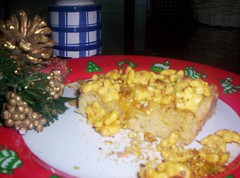
It was great joining Jennifer's cookie swap and now it's time to show our wares for Sugar High Friday # 3 being moderated by Zarah from Denmark. Because of time constraints,I've decided to come up with the Banana Pistachio Crunch which calls for the simple recipe of baking the banana cake spiced up with sour milk and nutmeg. The no-fuss topping of breakfast cereals and pistachios gives this yummy dessert its "crunch."
How-to (as adapted from the Philippines' Food Magazine:)
1. Make the sour milk by combining 1 tbsp. vinegar, 1/4 cup evaporated milk and 3 tbsp. water in a small bowl. Set Aside.
2. Begin making the cake.
Preheat oven to 350F and grease baking pan.
In a bowl, mix together 1/2 cup condensed milk and 1 cup mashed bananas. Set Aside.
In a separate bowl, combine 2 cups all purpose flour, 1/2 tsp. baking powder, 1/2 tsp. salt, 1/4 tsp. nutmeg, and 1/2 tsp. baking soda. Set aside.
In a bowl of electric mixer, cream 1/2 cup butter and 1 1/2 cups sugar at medium speed until light and fluffy. Add the two eggs, one at a time, beating well after each addition.
Lower mixer speed and pour in the banana mixture and 1/2 tsp. vanilla. Add the flour mixture alternately with sour milk, ending with the flour mixture.
Pour into the prepared baking pan and bake for about 15 minutes. (Best to check cake for doneness)
3. Make the topping. Combine 3/4 cup cornflakes (in this case, I used Honey Stars cereals), 1/4 cup sugar, 1/4 cup chopped pistachio nuts and 2 tbsp. butter.
After cake is baked, remove from oven and sprinkle the topping mixture on top.
Return cake to oven and bake for another 15 minutes or until top is crunchy.
Photo shows what's been left of the cake after the twins lapped it up. Surprise! Surprise! This simple dessert gives extraordinary enjoyment.